Thursday, January 6, 2022

ORION Returns In March With Schoenfield, Still And Tchaikovsky In Chicago, Evanston, Aurora And Via Livestream

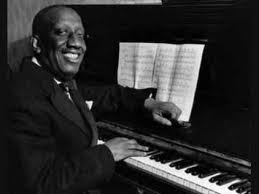
William Grant Still (1895-1978)

The Orion Ensemble

Music from the late 19th and 20th centuries fills the program for the third concert of The Orion Ensemble’s 29th season, featuring works by Schoenfield, Still and Tchaikovsky at three venues: New England Congregational Church in Aurora (March 6), PianoForte Studios in Chicago (March 9) and Nichols Concert Hall in Evanston (March 13). The Chicago and Evanston performances also will be available via livestream.

***

William Grant Still’s haunting and provocative Three Visions for Piano offers a musical journey of the eternal mystery: death and the questions of afterlife. This piano composition, which he composed for his wife in 1935, is provocative and alluring. Still’s Folk Suite #2 comprises delightful and colorful movements tastefully presented as chamber miniatures.

***
 
The livestreams from Chicago and Evanston will be available on Orion’s YouTube channel, which will also host a recording of the performance for a limited time.
 
The Orion Ensemble performs its third concert of the 2021–22 season
in person at three locations:
Sunday, March 6 at 7 p.m. at
New England Congregational Church, 406 W. Galena Boulevard, Aurora;
Wednesday, March 9 at 7:30 p.m. at
PianoForte Studios, 1335 S. Michigan Avenue, Chicago;
and Sunday, March 13 at 7:30 p.m. at
Nichols Concert Hall, 1490 Chicago Avenue, Evanston.
 
In-person tickets are $30, $25 for seniors (65+)
and $15 for students; children 12 and younger are free.
Tickets are available for advance purchase
at 630-628-9591 or info@orionensemble.org.
The livestream will be available on Orion's YouTube channel. 
All programming is subject to change; for information visit orionensemble.org.

Chelsea Opera welcomes two new Board Members, Richard Hobson and Anne Carlone Elacqua

Richard Hobson

Chelsea Opera

New York, NY – Chelsea Opera is delighted to announce the election of two new members of the Chelsea Opera board of directors, Richard Hobson and Anne Carlone Elacqua.

Richard Hobson is an accomplished baritone with a history of roles in Chelsea Opera productions, dating back to his company debut as Count Almaviva in Chelsea Opera's 2010 production of Le nozze di Figaro. Hobson has also sung for New York City Opera and had an extensive ten year tenure as an artist at the Metropolitan Opera. He is presently an Affiliate Artist at Southern University, where he teaches voice. Hobson remarked that he is thrilled to be among esteemed colleagues as a new member of Chelsea Opera's board of directors, “I look forward to exploring new avenues of growth and innovation with the board. This is a new and exciting venture for me. As I am the founder of the recently formulated Opera Southern, the resident opera company at Southern University in Baton Rouge, my association with Chelsea Opera will surely help inform Opera Southern's trajectory. I welcome the opportunity to become a part of this wonderful and much loved organization.” Director and co-founder of Chelsea Opera Leonarda Priore added, “we look forward to the many ways Richard will enhance, augment and compliment our already steadfast and gifted board. His input will elevate and expand the already good works that Chelsea Opera's board of directors continue to do and deeds brought to the table.”

Chelsea Opera (co-founded by Leonarda Priore and Lynne Hayden-Findlay) is a professional company presenting fully staged operas with chamber orchestra. The company provides an opportunity for professional singers to advance their careers while making opera affordable and accessible to a broad spectrum of the community.  Of Chelsea Opera’s sustainability, Anthony Tommasini of The New York Times noted:  “With American opera companies large and small struggling financially and a few going under, [Chelsea Opera is] a patch of encouraging news…”  Following its production of Aaron Copland’s The Tender Land, writer Jon Sobel declared: Chelsea Opera “certainly ranks as one of the country’s preeminent ‘small’ opera companies.”

Originally based in New York City, Chelsea Opera is currently expanding its productions to include Utica/Oneida County and Syracuse/Onondaga County, with regular productions planned for the area into the future. The company began bringing its annual holiday show, Bending Towards the Light . . . A Jazz Nativity by Anne Phillips, to Utica, NY in 2017, with performances dedicated to the memory of co-founder Leonarda Priore's brother Nicholas S. Priore. Later, performances were also expanded to Syracuse, NY. Chelsea Opera would continue to hold annual performances of the Jazz Nativity and other concerts in the Utica/Syracuse area. When the COVID-19 pandemic struck, Chelsea Opera ceased its planned productions for New York City out of safety concerns, and Oneida/Onondaga County served as a fitting second home for the company, adding additional programming in the area as soon as it was safe to do so. Priore was raised in the area, and has maintained a strong feeling of belonging to the community. Several members of Chelsea Opera's board also share a connection to Oneida county.

Formed in New York City in 2004 by singers, Leonarda Priore and Lynne Hayden-Findlay, Chelsea Opera was launched with an all-volunteer production of Suor Angelica. Initially, Priore and  Hayden-Findlay intended to produce only this one opera.  However, artist and audience response was so compelling they agreed to incorporate and obtained their IRS non-profit designation in a record eight days.  They have produced extensive standard and contemporary operas, garnering critical acclaim at each outing.

Chelsea Opera has received funding from The Baruch Foundation, The Alice M. Ditson, The Barbara Bell Cumming Foundation, The Tow Foundation, The Amphion Foundation, the H.O. Peet Foundation, the NYU Community Fund, the New York City Department of Cultural Affairs, the New York State Council on the Arts (NYSCA), and the National Endowment for the Arts (NEA).
       For further information, visit chelseaopera.org or write to: kenos@chelseaopera.org

Wednesday, January 5, 2022

ShriverConcerts.org: Univ. of Maryland Baltimore County: Sat., Feb. 26, 2022 at 3 PM "L'extase d'Amour" of H. Leslie Adams & "Wending" of Jeffrey Mumford

Jeffrey Mumford

H. Leslie Adams

Saturday, February 26, 2022 | 3:00 PM

Jordan Bak, viola
Megan Moore, mezzo-soprano
Wynona Wang, piano

Location: University of Maryland Baltimore County

H. Leslie Adams (b. 1932)

L’extase d’Amour

Jeffrey Mumford (b. 1955)

Wending

Jessica Meyer (b. 1974)

'On fire...no, after you' for Mezzo-Soprano, Viola, and Piano

World premiere

Johannes Brahms (1833-1897)

Two Songs for Mezzo-Soprano, Viola, and Piano, Op. 91

Arnold Bax (1883 – 1953)

Viola Sonata

Lara Downes: "Reflections: Scott Joplin Reconsidered"


Happy New Year my dear friends! I hope this greeting finds you healthy, safe and warm despite the extreme nature of the news and the weather.


On my mind at the start of this new year:

REFLECTIONS
My upcoming album REFLECTIONS: Scott Joplin Reconsidered looks back, with the perspective I've gained on my journeys through the landscape of American music, to explore the historical and cultural crossroads where Joplin's artistry originated, and to celebrate his innovations in shaping the future of the American sound.

The first single, Reflection Rag, is out now! Stream it wherever you listen to music, and pre-order the full album HERE (release date 2/4/22).

I hope this record will surprise you with new insights into Joplin's musical world. Did you learn The Entertainer when you were a kid?? I've reimagined it here as an intimate duet with the fabulous mandolinist Joe Brent. I'm especially thrilled to share with you the world premiere recording, featuring my recently-Grammy-nominated friend Will Liverman, of the heartbreaking ballad A Picture of Her Face; and the Brooklyn Youth Chorus brings a breath of fresh air to music from Joplin's opera Treemonisha. Come for your favorite tunes, and stay for some new discoveries!

Tuesday, January 4, 2022

Hyperallergic.com: New to Public Domain Jan. 1 are "The Weary Blues," a book of poems by Langston Hughes, and the play "Color Struck" by Zora Neale Hurston

Zora Neale Hurston (1891-1960)
(Library of Congress)

Langston Hughes (1902-1967)

Scott Joplin (c.1867-1917)

    Celebrate Public Domain Day With Works by Kafka, Hemingway, and Zora Neale Hurston

Also available is the first Winnie the Pooh book and Langston Hughes’s debut poetry collection.  


Monday, January 3, 2022

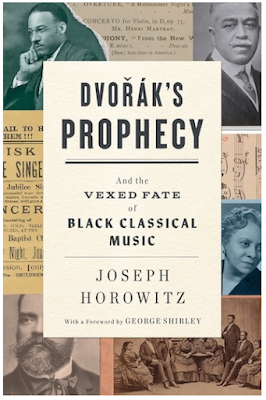
ArtsFuse.org: Book Review: #ClassicalMusicSoWhite? — How It Got That Way and What to Do about It


Dvorak's Prophecy 

And The

VEXED FATE

of

BLACK CLASSICAL

MUSIC

JOSEPH
HOROWITZ

WITH A FOREWORD BY GEORGE SHIRLEY

The Arts Fuse 

January 3, 2022

By Ralph P. Locke

Joseph Horowitz’s short, punchy, well-sourced, and compulsively readable book argues for bringing back the forgotten works of important Black composers.

Dvořák’s Prophecy and the Vexed Fate of Black Classical Music by Joseph Horowitz. W. W. Norton, 229 pp., $30 (hardcover).

For several years, newspapers and social media have drawn attention to the relative absence of African-Americans within the Academy of Motion Picture Arts and Sciences and within the list of nominees (and hence winners) for the Oscars. As a result, some progress is beginning to be made. A similar challenge, but regarding the classical-music industry, has been presented by music critic Joseph Horowitz over the past two decades in a series of articles, books, and festivals.

Horowitz’s latest book — short, punchy, well-sourced, and compulsively readable, if loosely structured — argues for bringing back the forgotten works of important Black composers such as Harry (Henry T.) Burleigh, Florence B. Price, R. Nathaniel Dett, William Levi Dawson, Margaret Bonds, and William Grant Still, along with those of Samuel Coleridge-Taylor, a Black British composer whose oratorio Hiawatha’s Wedding Feast was performed rather often here a century ago.

The volume touches on many other topics, notably the longstanding tendency of the classical-music establishment, over the past century, to favor music that displays high modernist complexity and to sneer at, or simply ignore, works that are written in an easily accessible style using — even if in fresh and rejuvenating ways — familiar harmonies and easily grasped melodies. Horowitz argues that the American classical-music industry has consistently suppressed or rejected any and all attempts at creating a distinctive American style of composition that connected with musical styles and genres widely enjoyed by the broad public. These accessible styles and genres not only included the living stream of African-American music (e.g., “Negro spirituals” and early jazz) but whole swaths of “mainstream” musical practice, including popular song, commercial dance music, the Broadway musical, and the hymn tunes of white churches.

That line of Horowitz’s argument directly connects to the book’s title. The composers I named at the outset were all primarily traditionalist, rather than modernist, in orientation. But the critic also devotes much attention to composers who were not Black. He makes the case for recognizing the symphonies of Charles Ives for their fresh and compelling uses of relatively accessible materials (e.g., catchy college tunes, or the rhythms and phrase structures familiar from marches, social dances, and — here’s where African-American music comes into this particular case — ragtime). Thus he believes that we should appreciate, not castigate, George Gershwin for making imaginative and powerful use of African-American “sorrow songs” (once widely known as “Negro spirituals”) in Porgy and Bess and of jazz elements in Rhapsody in Blue and the Piano Concerto in F.

Horowitz is undoubtedly correct. Self-appointed American tastemakers — concert organizers, conductors, conservatory directors, music critics, women’s music-club members, and so on — long insisted that European models of musical “high culture” be rigidly followed. This policy was carried out in the ensuing decades — at an increasingly high technical and interpretive level — by solo performers, symphony orchestras, and opera companies as well as by the composition departments of many music schools.

One particularly unfortunate result has been (to go back to the book’s title) a severing of the natural and productive bond between members of the African-American community and the classical-music world, a bond that was emphatically encouraged by Czech composer Antonín Dvořák during his two-plus years in the US and that, for a time, did exist, beginning with Dvořák’s talented and determined student Harry Burleigh. 

***

In recent years, individual performers and groups have been programming and recording — partly in response to the Black Lives Matter movement — significant but little-known or even newly discovered pieces by notable Black composers. Some of the artists are Black (such as prominent young baritone Will Liverman) or not (the somewhat more established baritone Lucas Meachem). Some of the recordings are on major labels (Deutsche Grammophon’s release of Symphonies 1 and 3 by Florence Price, with the Philadelphia Orchestra conducted by Canadian-born Yannick Nizet-Séguin). At least two (the Liverman and Florence Price recordings just mentioned) have recently been recognized by Grammy nominations. And the Buffalo Philharmonic has just announced its latest release (to be available through Naxos) of works by six composers: Bach, Haydn, Vaughan-Williams, and American composers Wayne Barlow, Ulysses Kay, and George Walker. Kay and Walker were perhaps the most prominent Black composers of concert music in the late twentieth century. The Kay work, Pietà, for English horn and orchestra, is a recorded premiere.

Sunday, January 2, 2022

JournalStar.com: "UMKC Conservatory Singers to perform at First-Plymouth" Jan. 15, 7:30 PM in works of William Levi Dawson, R. Nathaniel Dett & Undine Smith Moore

William Levi Dawson (1899-1990)

R. Nathaniel Dett (1882-1943)

Undine Smith Moore (1904-1989)

Lincoln Journal Star

Lincoln, Nebraska

UMKC Conservatory Singers to perform at First-Plymouth

December 31, 2021

The Conservatory Singers from the University of Missouri-Kansas City Conservatory will present “Legacy: Cathedral Classics and the African American Spiritual” Saturday, Jan. 15, at 7:30 p.m. at First-Plymouth Church, 20th and D streets.

The concert is part of a year-long program celebrating the work of prominent African American composers who have shaped the legacy of choral music. The program includes works by William Dawson, R. Nathaniel Dett, Undine Smith Moore, Jeffrey Ames as well as works by Jennifer Higdon, Felix Mendelssohn, Hans Leo Hassler and more.

The 40-member Conservatory Singers chorus is conducted by Director of Choral Studies Dr. Jennaya Robison. Admission is free, and a free-will offering will be received during the concert.

The chorus consists of graduate and highly skilled undergraduate students. The Conservatory Singers have a rich history of creative programming and collaboration, and regularly commission and perform new choral works by America’s finest composers.


Gothamist.com: Lincoln Center Is Reckoning With Its Racist History

[Courtesy of Lincoln Center]
 
James Price Johnson (1894-1955)


December 30, 2021

Jennifer Vanasco

Long before Lincoln Center became one of the world’s foremost destinations for the performing arts, the land it sits on was at the heart of a thriving Black and Latino Upper West Side neighborhood on the Upper West Side known for its musical richness. It was called San Juan Hill and it fostered top jazz musicians, Broadway talent and other Black icons — and yet its memory is now largely lost.

Now, almost 70 years after that community was razed, Lincoln Center’s leadership is grappling with the pain inflicted on those the city displaced and is searching for meaningful ways to widen the reach of the cultural landmark, which has mainly served white audiences.

“In order to move forward as a more inclusive and just institution, we should start at our roots,” said Henry Timms, the organization’s president and CEO. “That means engaging with the origin story of Lincoln Center’s development in its full truth.”

Around the turn of the 20th century, Black residents and Caribbean immigrants started to move to San Juan Hill, which was bounded by Columbus and West End avenues, between about 58th and 70th streets. Perhaps the neighborhood was named after the Buffalo soldiers, the 2,000 Black troops who fought under Theodore Roosevelt in Cuba during the Spanish American War. Many of them are said to have relocated there.

San Juan Hill soon became a neighborhood of bustling creativity. The area was so well-known by the 1930s that Duke Ellington and his orchestra recorded a song called “San Juan Hill.” It’s reputedly where pianist James P. Johnson introduced a dance called “The Charleston,” which swept the country in the 1920s.

It’s also where the musical “Shuffle Along” debuted in 1921. It was an all-Black show with an all-Black creative team, and when it transferred to Broadway, it introduced jazz to the stages there, becoming a sensation among the mixed-race audiences who came to see it. The 2016 version about the making of that musical, starred Audra McDonald, Brian Stokes Mitchell and Billy Porter.

Ram Ramierez — who wrote songs for Billie Holiday, including “Lover Man” — lived in the neighborhood with his family after they migrated from Puerto Rico in the 1920s. Jazz pianist Thelonius Monk moved there as a child around the same time, in 1922, and the neighborhood’s cramped clubs became a crucible for BeBop, with Dizzy Gillespie and Charlie “Bird” Parker playing there.

Monk later raised his children in San Juan Hill. His son, the drummer Thelonious Monk, Jr., spoke with WNYC in 1984, two years after his father died, about growing up in the neighborhood.

“What Amsterdam looked like back then — little shops, drug store, ice cream parlor, little houses — teeming, like the Lower East Side in the ’20s, crowded, full of life and colors and people doing their daily business,” he said in an interview that’s now held by the NYC Municipal Archives.

By mid-century, the neighborhood had also become a center of Puerto Rican life, as large groups of migrants settled in the area.

“There were so many different kinds of people,” Monk said in the 1984 interview. “It was just a great, great neighborhood.”

He remembered San Juan Hill as a place filled with performance. There were puppet shows in the park, he said, and on summer evenings, a screen was hung from a flagpole so residents could watch outdoor movies.

And he remembered that everything changed when Robert Moses, then chair of the New York City Committee on Slum Clearance, decided that San Juan Hill was an ideal candidate for one of the nation’s largest “urban renewal” projects.

“We called it ‘urban removal,’” Monk said. “Of course, they told everyone they were going to refurbish the neighborhood and everyone was going to move back. Of course everyone never moved back. And the rents went sky high.”

***

Title I of the federal 1949 Housing Act allowed local governments to take property through eminent domain — and provided some of the funds to do it — as long as they then built middle-class housing for the post-war population boom. The New York Times said, by the time the neighborhood was demolished, the city moved 7,000 families and 800 businesses out of the area.

Moderate-income housing was built after the San Juan Hill tenements and brownstones were leveled — but the centerpiece of the development was Lincoln Center, which now sits on more than 16 acres, including LaGuardia High School, and Fordham University’s Upper West Side campus.

The Lincoln Center complex, which opened in 1962, was a citadel. Critics noted that it was designed to separate itself from the Black and Latino people who still lived in the area, particularly in the New York City Housing Authority’s Amsterdam Houses, which were built in 1948 as part of an earlier eminent domain project. While Lincoln Center’s east side opens out onto a wide plaza with its iconic fountain, its western edge is blocked by an uninviting, blank wall that runs along Amsterdam Avenue.

Saturday, January 1, 2022

Clipper Erickson: Music for the Soul 2022 February 18th | 7:00 PM Presented at 1867 Sanctuary 101 Scotch Road, Ewing, NJ - Livestreamed

 
Clipper Erickson

In the midst of all of the ups and downs at this time of the year, I feel it's important to take a moment to stop and consider all of the things that I have to be grateful for:
  • Life
  • Music
  • Family
  • Friends
  • Cats?
  • Wine


But most importantly, I am grateful for you.  As a listener, you've been with this endeavor every step of the way, and you're the reason that I continue my work of studying, exploring, and performing.

2022 will be bright, whether we're in person or online, and I will continue my mission of sharing this music with you and elevating this message.

Thank you for all that you are and all that you do!
Clipper

Save the Date:

Music for the Soul 2022


February 18th  |  7:00 PM
Presented at 1867 Sanctuary
101 Scotch Road, Ewing, NJ

In person and livestreamed
Additional details to follow   
                                 

InterlochenPublicRadio.org: Music by Request with Sphinx LEAD [Listen to the entire episode on demand]


 Sphinx LEAD cohort members outside of Interlochen Public Radio. L to R: Vanessa Kestner, Christopher Anderson, Yvette Loynaz, LaSaundra Booth, and Rod Vester. Not pictured: Alexa Smith


December 31, 2021

Recently, six members of the Sphinx LEAD program visited Interlochen Center for the Arts for a leadership retreat.

We invited them to curate a special edition of Music by Request during their visit.

Each person chose a piece of music and told us why it was special to them.

Listen to the entire episode on demand, and learn more about these six Sphinx LEAD cohort members below.

Listed in order of appearance in the program

Vanessa Kestner, Director of A Gift for Music

  • Arturo Márquez, Danzon no. 2

Roderick Vester, Director of Contemporary Music and Assistant Professor of Contemporary Music at Shenandoah University

  • Johann Sebastian Bach, Prelude and Fugue in A minor (BWV 543)
[For full program, follow Listen link above]